
Indian stock markets have experienced some ups and downs in the first half of 2025. However, both the Nifty 50 and Sensex saw steady gains, supported by a healthy economy and better corporate earnings. In this article, we will look at the detailed performance of these key indices and explore the sectors that drove the market rally.

Clearing the way for oil refiners to pay Iran in Indian rupee, the Union Budget has exempted the payments made for crude oil purchased from the Persian Gulf nation, from any local tax.

Buyers find ways to cope with shipping restrictions.
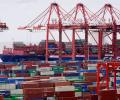
After staging a strong recovery from COVID-induced slowdown in 2021, India's exports are likely to extend the growth story to the New Year also on increased demand in the global markets, boost in domestic manufacturing due to production-linked incentive schemes and implementation of some interim trade pacts. Expectations of positive growth in the country's exports are also backed up by the outlook of the World Trade Organisation (WTO) which predicts a 4.7 per cent expansion in the global merchandise trade volume in 2022. Exporters believe that the outbound shipments would cross $400 billion mark in this fiscal going by the current momentum and may reach $475 billion in 2022-23.

However, copious oil supplies amid growing global output and slowing Chinese oil consumption will put India in a better bargaining position with Gulf suppliers.
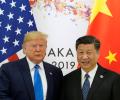
'If you compare the data from 2017 and 2023 of the US imports from the world and China, you will see that the US was a complete loser in the trade war, and China was a complete gainer.'

Major General S C N Jatar, who passed into the ages on Monday night, thwarted anti-national forces at the peak of the Assam agitation. Colonel Anil A Athale (retd) salutes this officer and gentleman.
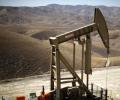
Higher crude oil prices also translate into better corporate earnings for India's top companies

The Organisation of the Petroleum Exporting Countries (OPEC) has decided to cut its daily oil production by about 2 million barrels. OPEC's daily output target is 27.3 million barrels.

Subdued demand from developed countries and blocs like the US and EU is impacting exports of key sectors including engineering, gems and jewellery and may have implications on India's exports in case the global situation does not improve in coming months. Global inflation, Russia-Ukraine war, simmering China-Taiwan crisis and supply disruptions are hurting economic growth worldwide, leading to poor demand, experts say. The world merchandise trade volume is expected to grow 3 per cent in 2022 against the earlier forecast of 4.7 per cent, mainly due to the ongoing war between Russia and Ukraine, according to the World Trade Organization forecast, released in April.

India's import of cheap Russian oil scaled another record in May and is now more than the combined oil bought from Saudi Arabia, Iraq, UAE and the US, industry data showed. India took 1.96 million barrels a day from Russia in May, 15 per cent more than the previous high in April, according to data from energy cargo tracker Vortexa. Russia now makes up for nearly 42 per cent of all crude oil India imported in May.
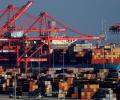
Senior officials of India and the US will begin three-day talks on the proposed bilateral trade agreement in New Delhi on Wednesday amid threats of reciprocal tariffs from the Trump-administration, an official said. To formally start the negotiations on the pact, Assistant US Trade Representative for South and Central Asia Brendan Lynch, along with a team of officials, is in New Delhi.
Saudi Arabia, the world's largest oil exporter, is reported to be investing $4-5 billion in the force

The country's exports rose by about 6 per cent to a "record" $447 billion during 2022-23 on account of healthy growth in the outbound shipments of sectors such as petroleum, pharma and chemicals and marine, Commerce and Industry Minister Piyush Goyal said on Thursday. The country's imports also grew by 16.5 per cent to $714 billion in 2022-23 as against $613 billion in 2021-22. He said that the exports of goods and services together scaled "new heights" and has increased by 14 per cent to $770 billion in 2022-23 as against 676 billion in 2021-22.

The US has extended waivers that exempt nine countries, including India and China, from fully complying with American sanctions targeting Iran's oil exports, citing their significant reduction in oil import from Tehran.

Exports declined for the fourth-consecutive month by 10.3 per cent year-on-year to $34.98 billion in May, while the trade deficit widened to a five-month high of $22.12 billion. According to the data released by the commerce ministry on Thursday, key export sectors recording negative growth include petroleum products, gems and jewellery, engineering goods, ready-made garments of all textiles and chemicals. Imports also declined 6.6 per cent, six-month in a row, to $57.1 billion against $61.13 billion in the same month last year, the data showed.

India and the United States will finalize the contours, schedule of negotiations, and terms of reference for a proposed bilateral trade agreement (BTA) during a three-day meeting beginning Tuesday. The agreement is expected to be finalized in two tranches, with the first phase focusing on goods trade. The US team, led by Assistant US Trade Representative for South and Central Asia Brendan Lynch, will be in India from March 25-29 to discuss the agreement. Both countries are aiming to conclude the first phase of the agreement by fall 2025.
Oil demand from China and India alone is expected to double in the next two decades as their economies continue to expand

India is expected to ramp up its purchase of crude oil from the United Arab Emirates (UAE) in the coming months following discussions between the two countries on the sidelines of the ongoing COP28 summit in Dubai, multiple sources in the know said. The UAE has historically been India's third-largest source of crude. It has suffered the largest drop in shipments since Indian refiners began to binge on Russian crude in 2022.
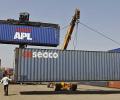
Export growth picked up mainly owing to rising global crude prices, which pushed up processed petroleum exports by nearly 40 per cent, apart from a broad-based improvement in exports of major foreign exchange earners such as engineering goods and gems and jewellery.

'I am not an aspiration-oriented politician.' 'This is the time to redefine politics.' 'Politics of power is not real politics.'

India was looking at tapping new markets for import of edible oils, following the conflict between Ukraine and Russia, Union Finance Minister Nirmala Sitharaman said on Tuesday. According to her, the country was facing various hurdles on import of edible oils due to the conflict. "Everyone knows there is a war going on between Russia and Ukraine. There are various hurdles in terms of importing oils.
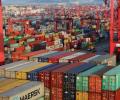
After the first quarter was washed out, exporters are now keeping their fingers crossed over a turnaround in outbound shipments to at least North America from September onwards. This comes even as other key destinations such as Europe may take longer to revive in FY24. Slowdown in key economies, as well as geopolitical tensions resulted in sluggish demand for Indian goods.
India features in the list of top 10 exporters to the UAE in November, 2010, with a total value of $6.9 billion (25.4 billion dirhams), or 63 per cent of UAE imports, the country's Federal Customs Authority (FCA) has said.

The importance of China as India's top trading partner cannot be understated.
A healthy growth in India's services segments has helped the country's total exports and imports of goods and services to cross the $800 billion mark during the first half of 2023, despite a slowdown in global demand, think tank GTRI said in a report on Monday. According to the analysis of the Global Trade Research Initiative (GTRI), exports of goods and services rose by 1.5 per cent to $385.4 billion during January-June this year, as against $379.5 billion in January-June 2022. Imports, however, dipped by 5.9 per cent to $415.5 billion during the six months of this year, as against $441.7 billion in January-June 2022.

The US Trade Representative noted that India's average applied tariff rate stood at 17% per cent, the highest of any major world economy.
Exports grew to $14.4 billion in April 2008-09, against $10.95 billion a year ago. Imports, fuelled by a big rise in purchase of crude oil from abroad, went up to $24.27 billion against $17.76 billion. Trade deficit widened to $9.87 billion in the opening month of the current fiscal against $6.81 billion in the same period last year.

From the Sensex pack, Adani Ports, Tata Steel, Power Grid, Mahindra & Mahindra, NTPC, Tech Mahindra, Tata Motors, ITC, Nestle India, HCL Technologies, Bharti Airtel, State Bank of India, Asian Paints and Kotak Mahindra Bank were the gainers. Bajaj Finance, IndusInd Bank, HDFC Bank, and Zomato were the laggards.

State Bank of India, Tech Mahindra, Larsen & Toubro, Tata Steel, Sun Pharma, Infosys, HCL Tech, Axis Bank, Tata Consultancy Services and NTPC were among the biggest laggards among Sensex shares. Nestle, Hindustan Unilever, Titan, Power Grid, UltraTech Cement and ITC were among the gainers.

Falling for the fifth day in a row on Monday, equity benchmark BSE Sensex tumbled over 1 per cent to drop below the crucial 75,000 level, tracking a US market trend and unabated foreign fund outflows amid concerns over US tariffs. The 30-share BSE benchmark tanked 856.65 points or 1.14 per cent to settle at 74,454.41. During the day, it plummeted 923.62 points or 1.22 per cent to 74,387.44.

'Many of these issues will be resolved within 6 months because the US economy has started unravelling.'
Indian petroleum product exports are likely to rise three to five per cent this fiscal year from 2001/02, a senior industry official said on Monday.

Exports to India's key markets - the US, the United Arab Emirates, China, Singapore, Bangladesh and Germany - witnessed a sharp decline, resulting in a 12.69 per cent contraction in outbound shipments during the first month of the current financial year, commerce department data showed. India's biggest export market - the US - with 17 per cent share witnessed 17.16 per cent contraction at $5.9 billion in April. This was followed by the United Arab Emirates (UAE) that saw 22.09 per cent decline at $2.23 billion exports.

The government said there is no proposal to abolish import duty on refined edible oils and no plans to ban sugar exports through Advance License Scheme, under which mills have an obligation to export about one million tonnes of sugar by March. "We have no such proposal," Food Secretary B C Gupta told reporters here when asked if the government was planning to waive off import duty on refined edible oils from the existing charge of 7.5 per cent.

'Could the impending new crisis, vibe coding, similarly create not a disaster like what befell Indian handlooms during the Industrial Revolution but another opportunity like what the Y2K crisis created?' asks Ajit Balakrishnan.

India imports about 25 million tonnes of oil from Iraq each year.

India's imports of crude oil from Russia touched a new high of 1.64 million barrels per day in March and is now double of the purchases from Iraq - the nation's traditional top oil supplier. But the purchases appear to have plateaued as growth has slowed. Russia continued to be the single largest supplier of crude oil, which is converted into petrol and diesel at refineries, for a sixth straight month by supplying more than one-third of all oil India imported, according to energy cargo tracker Vortexa.
